
Most fashion films age with their wardrobe. What looked aspirational at the time starts to feel outdated within a few years. The Devil Wears Prada is one of the few exceptions.
Released in 2006, it has remained a consistent reference point in fashion, workplace culture, and pop culture discussions for two decades and with a confirmed sequel hitting theaters on May 1, 2026, it is getting a second moment that very few films ever earn.
Key Takeaway:
The Devil Wears Prada remains a fashion classic because it combines timeless costume design, a sharp portrayal of workplace dynamics, and cultural relevance that has evolved over time, now reinforced by its confirmed 2026 sequel.
What Is The Devil Wears Prada About?
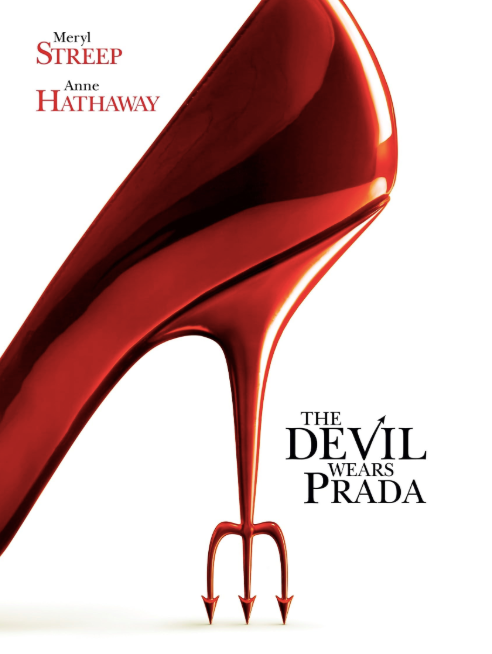
The film follows Andy Sachs, a journalism graduate who lands a job as junior assistant to Miranda Priestly, the feared editor-in-chief of Runway, a high-fashion magazine. Meryl Streep plays Miranda. Anne Hathaway plays Andy.
Key characters at a glance:
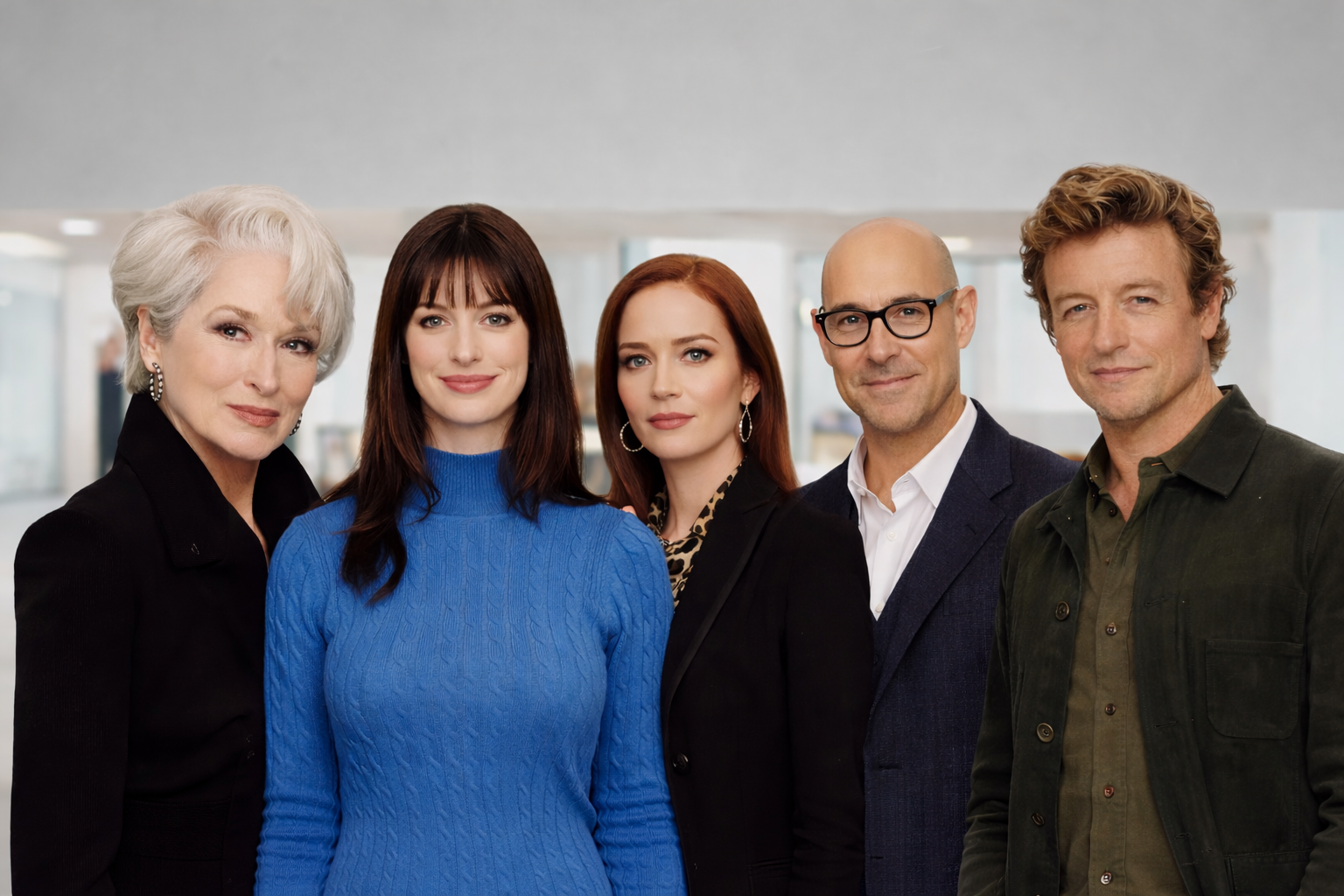
- Miranda Priestly: The demanding, minimalist editor-in-chief of Runway magazine, widely believed to be inspired by Vogue‘s Anna Wintour.
- Andy Sachs: An aspiring journalist who takes the assistant job as a career stepping stone and gets far more than she bargained for.
- Emily Charlton: Miranda’s senior assistant, played by Emily Blunt, whose role in the sequel has expanded significantly.
- Nigel: Runway‘s art director, played by Stanley Tucci, who serves as Andy’s only real ally inside the magazine.
The dynamic between Andy and Miranda, the rookie trying to survive and the powerhouse who notices nothing unless it is wrong, is what drives the entire film.
Why The Devil Wears Prada Is Still a Fashion Classic?
Even after nearly two decades, the film continues to influence how fashion, power, and ambition are perceived, making it worth examining what keeps it relevant.
Iconic Costume Design That Still Influences Trends
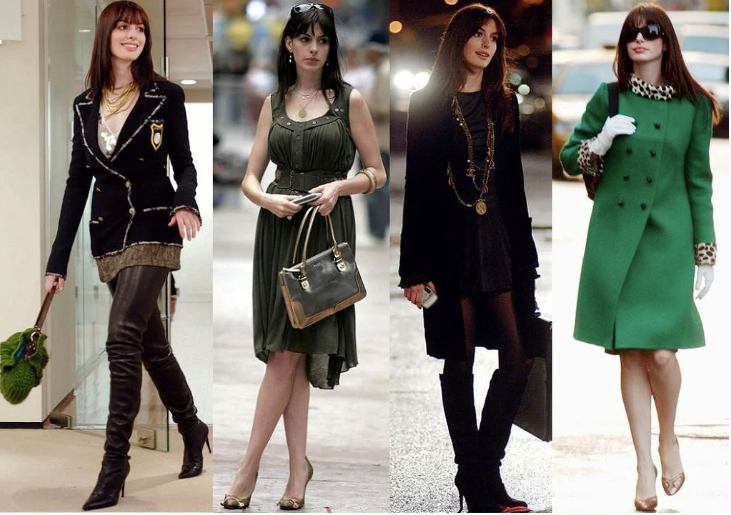
Patricia Field, the costume designer behind the film, sourced pieces directly from Chanel, Valentino, Dolce & Gabbana, and Prada. Every outfit was a character decision, not just a wardrobe choice.
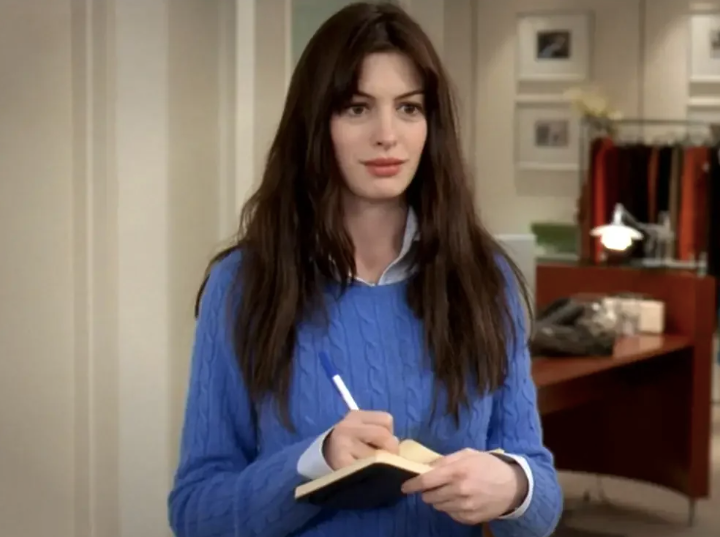
Andy’s transformation from unremarkable basics to sharp editorial dressing remains one of the most referenced style shifts in modern cinema. More importantly, the film put a widely understood concept on screen for the first time, that fashion filters down from a small number of industry decisions, and by the time a trend reaches a high street store, it was decided years earlier.
The cerulean sweater monologue, delivered by Streep in under two minutes, is still used in fashion education to explain how consumer taste is shaped before consumers are even aware of it.
Characters That Redefined Power Dressing on Screen
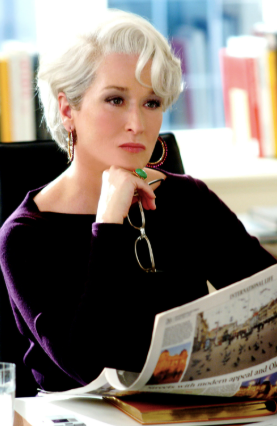
Miranda Priestly set a specific standard for how authority looks. Structured coats, white hair, barely raised voice, she communicated control through restraint, not aggression. That portrayal directly shaped how power dressing was discussed and referenced for years after the film was released.
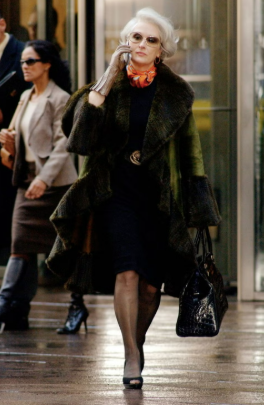
The quiet luxury aesthetic that dominated fashion from 2022 onward tracks closely to what Miranda wore throughout the film, expensive, understated, and deliberate. The film put a face to a style philosophy before the terminology existed.
Honest Portrayal of the Fashion Industry
The film did not glamorize fashion publishing. What it showed instead:
- Unreasonable working hours as a baseline expectation.
- A workplace culture built entirely around one person’s preferences.
- The emotional and personal cost of entry-level work in high-pressure environments.
- The normalization of professional demands that would be considered unacceptable in most other industries.
Former assistants at major fashion publications have consistently noted that the film captured the emotional reality of that world with more accuracy than the industry expected or was entirely comfortable with.
How the Film’s Meaning Has Evolved Over Time?
What once looked like a success story now raises questions about cost, control, and the price of ambition.
Then vs Now: How Audiences Read It Differently
| Era | How Audiences Read It |
| 2006 | An aspirational career story with a satisfying ending |
| Early 2010s | Entertaining fashion film with a strong performance from Streep |
| Post-2020 | A study in workplace toxicity, burnout, and identity erosion |
The film has not changed. The audience’s frame of reference has. Miranda’s behavior, which read as dramatically demanding in 2006, is now routinely dissected as a textbook case of workplace abuse normalized under the banner of excellence.
What Gen Z Takes From the Film Today?
For younger workers who entered the workforce during peak burnout and work-life balance conversations, the film reads almost as a case study. Specifically:
- Andy losing her personal relationships as a direct consequence of overwork.
- Her identity gradually shifts to match the environment she is trying to survive in.
- The film never fully rewarding her for the sacrifices she makes inside Runway.
These are conversations Gen Z is actively having, about boundaries, career identity, and what professional success actually costs. The film gave those conversations a shared cultural reference point that spans age groups.
Cultural and Fashion Industry Impact
Beyond its storyline, the film has had a measurable impact on fashion trends and public understanding of the industry.
How It Changed Office Fashion?
The film made a direct argument, visually and narratively, that professional dressing is intentional communication. That idea moved from niche fashion circles into mainstream awareness after 2006.
What shifted in fashion culture after the film:
- Power dressing saw a measurable resurgence in editorial coverage and retail buying.
- The concept of building a deliberate work wardrobe, rather than simply meeting a dress code, entered mainstream conversation.
- Personal styling as a professional tool became widely discussed outside the fashion industry for the first time.
How It Changed Fashion Media Perception?
Before the film, the internal workings of major fashion magazines were largely inaccessible to general audiences. The Devil Wears Prada created genuine public interest in the hierarchies and pressures of fashion publishing that had not existed at that scale before.
Anna Wintour, the real-world basis for Miranda, given that author Lauren Weisberger worked as her assistant before writing the novel, became a significantly more public cultural figure as a result. When news broke in 2025 that Wintour was stepping down from Vogue, public interest in the sequel sharpened immediately. The timing was not lost on anyone.
Key Lessons The Devil Wears Prada Still Teaches
Three observations from the film that have only become more relevant since 2006:
- Ambition without self-awareness has a real cost. Andy’s transformation is visually compelling but narratively a cautionary arc. The film never fully celebrates what she becomes inside Miranda’s orbit.
- Workplace mentorship is rarely clean or simple. Miranda is not a good mentor by conventional standards, yet Andy gains more professional clarity from that relationship than from anyone else. The film holds that contradiction without resolving it.
- Workplace culture is set at the top. Everything inside Runway flows directly from Miranda’s standards and tolerance levels. That observation applies across every industry, which is why this film’s workplace dynamics have remained discussion-worthy for 20 years.
The Devil Wears Prada 2: Release Date, Cast, and What to Expect
Nearly two decades later, the story is set to continue, bringing renewed interest in its next chapter.
Official Release Date of The Devil Wears Prada 2
The Devil Wears Prada 2 releases in theaters on May 1, 2026, distributed by 20th Century Studios. Principal photography ran from June 30 to October 2025, with filming locations across New York City, Newark, and Milan.
Full Confirmed Cast
| Returning Cast | New Additions |
| Meryl Streep | Kenneth Branagh |
| Anne Hathaway | Simone Ashley |
| Emily Blunt | Lady Gaga |
| Stanley Tucci | Justin Theroux |
| Lucy Liu | |
| B.J. Novak | |
| Pauline Chalamet |
Director David Frankel and writer Aline Brosh McKenna, both from the original, are back for the sequel.
What the Sequel Is About?
The sequel centers on Miranda Priestly navigating the decline of print media, while Emily Charlton, now a high-powered executive at a luxury conglomerate, controls advertising dollars that Miranda’s magazine desperately needs.
Andy has returned to Runway as its new features editor, though in true Miranda fashion, Miranda does not appear to remember her.
Key themes the sequel addresses:
- The collapse of print publishing and the rise of digital media.
- Shifting power dynamics when former assistants become industry peers.
- What happens to legacy institutions and legacy figures, when the industry they built moves on.
Trailer and Early Reception
The teaser trailer, released during the 2026 Grammy Awards, was reported as the most-viewed comedy trailer in 15 years, pulling 222 million views within its first 24 hours.
Why the Sequel Matters for the Film’s Legacy?
Studios do not greenlight sequels nearly 20 years after the original without sustained, measurable audience demand.
The development of this film, confirmed in July 2024, reflects an active and ongoing cultural conversation around the original, not nostalgia for it. The sequel arrives into a ready audience because that audience never stopped engaging with the source material.
Conclusion
The Devil Wears Prada has maintained cultural relevance for 20 years because the questions it raises, about ambition, workplace power, and professional identity, have become more widely discussed, not less.
The sequel, arriving with its full original cast in May 2026, is a direct response to an audience that never stopped engaging with the material. That kind of staying power does not happen by accident.
